
Orthopedics and sports medicine · Munich
Frozen shoulder
Frozen shoulder is characterized by pain and restriction of both active and passive movement. It differs from being unable to lift the arm because of weakness alone. The course can be prolonged and the current irritability influences what treatment is tolerable.
Assessment
What the assessment considers
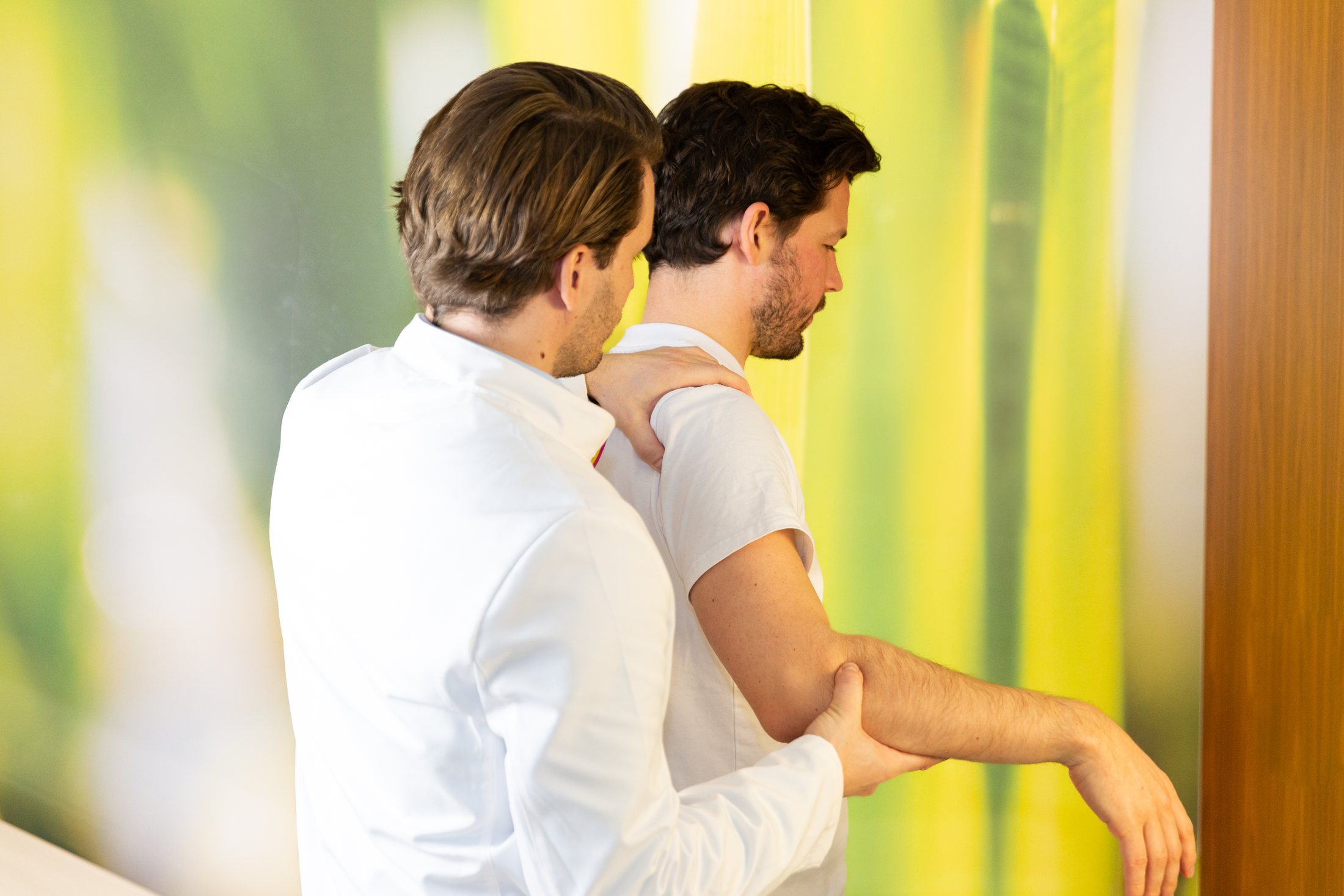
The examination checks the pattern of restricted movement, especially external rotation. Relevant history includes diabetes, previous injury or surgery and symptom duration. X-rays can help exclude arthritis; additional imaging is selected if another diagnosis remains possible.
Next steps
Treatment and next steps
Treatment is matched to pain and stiffness. Education, symptom relief and appropriately dosed mobility work may be combined with an injection in selected cases. Forceful stretching can be poorly tolerated in a painful phase. Procedures for persistent stiffness require a separate assessment of benefits and risks.
Your consultation
Prepare for the consultation
Bring original images and reports, previous operation notes, a medication list and a short timeline of symptoms and treatment. Write down the activities you want to regain and your most important question. Initial inquiries should not include confidential medical attachments; agree a suitable transfer route with the practice first.
Travel and continuity of care
Coming from abroad?
Confirm the consultation language, any interpreting needs, fees and the appropriate appointment before booking travel. This website’s language does not guarantee a consultation in that language. Follow-up and communication with your local clinicians should be planned in advance.
Related information
Continue with your next question.
Second opinion
A second opinion examines whether an existing recommendation fits your symptoms, function and goals. It may confirm the proposed treatment or identify an alternative; it is not a promise to avoid surgery.
Rehabilitation
Plan recovery around function, progressive loading and your activity goals.
Detailed German article
The original German page, including its detailed discussion and references.
Common questions
Answers to common questions.
Do I need to repeat my scans?
Not automatically. Bring the original images and reports first. Further imaging is considered if the existing study does not answer the clinical question or if your condition has changed.
Can this be assessed without travelling?
Some questions can be reviewed from records, but physical examination may be essential. Ask the practice to confirm suitability, scope and a secure document-transfer route before sending records or booking travel.
How are treatment costs and follow-up agreed?
Request an individual estimate and clarify reimbursement with your insurer. Ask which examinations, written reports and follow-up visits are included. International patients should also plan rehabilitation and medical contact after returning home.
 PD Dr med Daniel P. BertholdOrthopedic surgeon · University lecturer · Sports orthopedics
Author and medically responsiblePD Dr. med. Daniel P. BertholdSpecialist in Orthopaedics and Trauma SurgeryUpdated
Next step
Which contact route fits your request?
Choose between a clinical appointment, second opinion, athlete care or a professional inquiry.