
Knee Specialist in Munich
Knee specialist in Munich
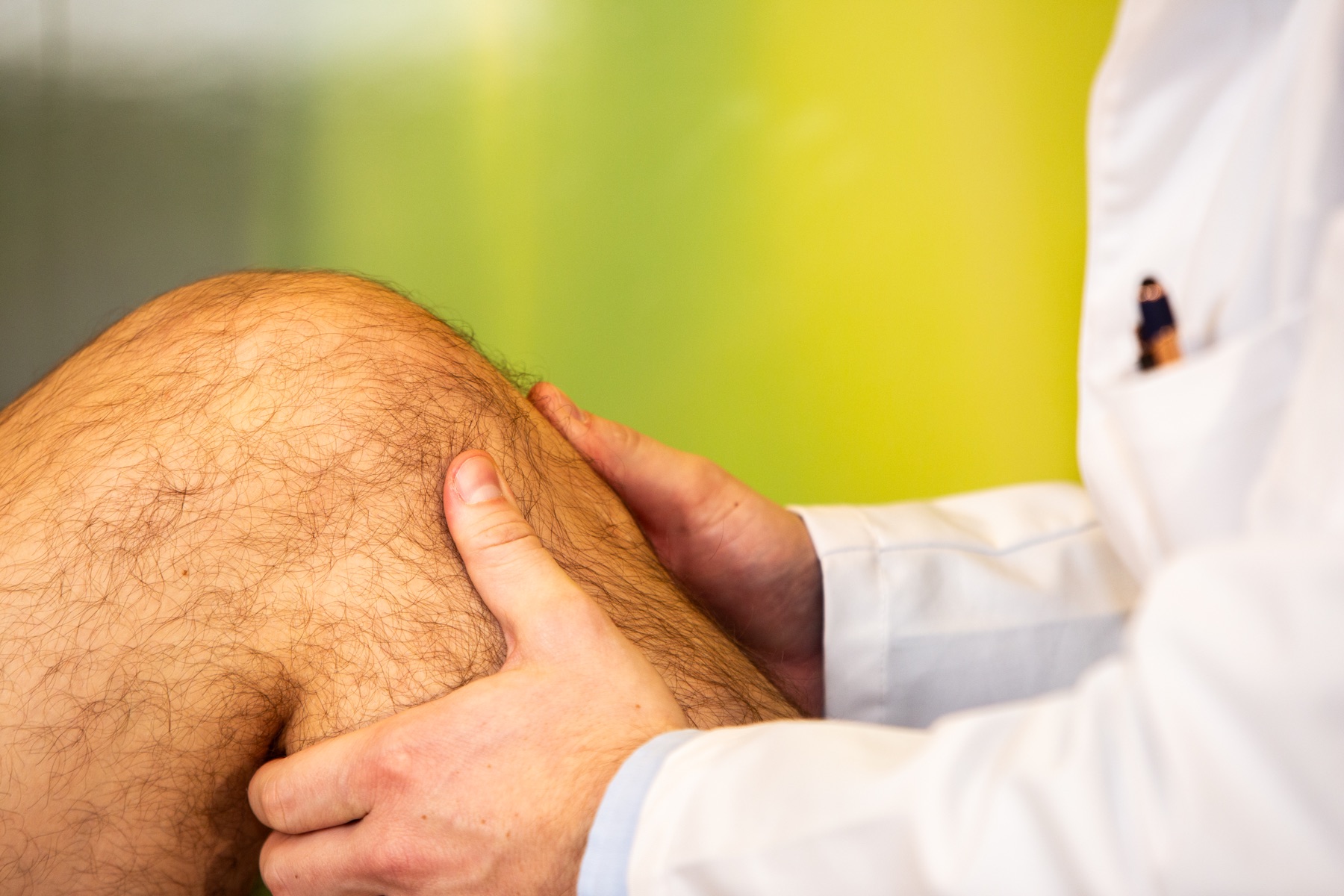
Knee pain can arise from the meniscus, ligaments, cartilage, kneecap, tendons, bone or osteoarthritis. A specialist assessment connects the clinical pattern with stability, movement, load tolerance and imaging instead of treating the MRI report in isolation. Clinical appointments with Daniel Berthold are provided through OrthoCenter Munich.
At a glance
What matters for this decision.
- Meniscus, ACL, cartilage, patellofemoral and arthritis-related questions
- Assessment of pain, swelling, instability and loss of performance
- Treatment planning based on function, tissue findings and activity goals
- Second opinions before knee surgery or after an unclear recovery
Decision guide
Four points to discuss before deciding.
Use these points to prepare the question you want a second opinion to clarify.
- 01
Starting point
Meniscus, ACL, cartilage, patellofemoral and arthritis-related questions
- 02
Available information
Assessment of pain, swelling, instability and loss of performance
- 03
Options
Treatment planning based on function, tissue findings and activity goals
- 04
Next step
Second opinions before knee surgery or after an unclear recovery
Knee problems
Different structures can produce similar symptoms.
Pain during twisting, running, stairs or deep flexion does not identify a diagnosis on its own. Swelling, locking, giving way, tenderness, strength and the timing of symptoms help narrow the cause.
The assessment considers meniscus and ligament integrity, cartilage, alignment, muscle function and the demands of work or sport. This is particularly important when more than one finding appears on the scan.
Treatment decision
The right plan depends on the problem the knee must solve.
Some knee conditions respond well to load modification, targeted rehabilitation and progressive strength work. Others require a discussion of injections, joint-preserving procedures or surgery. Age alone, or one line in an MRI report, does not decide between these paths.
A practical plan defines the goal, the expected time course, the criteria for progression and the point at which the approach should be reviewed.
Common questions
Answers to common questions.
Can a knee problem be assessed without a new MRI?
Often the history and physical examination clarify which imaging, if any, would change management. Existing recent images may be sufficient, while some questions require additional or weight-bearing imaging.
Is every meniscus or cartilage finding a reason for surgery?
No. Symptoms, tear or defect characteristics, stability, alignment, activity demands and the response to rehabilitation all influence whether surgery is reasonable.
 PD Dr med Daniel P. BertholdOrthopedic surgeon · University lecturer · Sports orthopedics
Author and medically responsiblePD Dr. med. Daniel P. BertholdSpecialist in Orthopaedics and Trauma SurgeryUpdated
Next step
Which contact route fits your request?
Choose between a clinical appointment, second opinion, athlete care or a professional inquiry.