
Running medicine · Munich
Medical running and gait analysis in Munich
A medical running analysis combines your symptoms and training history with clinical examination, functional testing and observation of your running. Its purpose is to identify useful changes to loading, rehabilitation or further assessment—not to impose a single ideal running style.
At a glance
What matters for this decision.
- Start with the symptoms and the training question
- Examine the whole movement chain, not only the foot
- Select video, treadmill or pressure measurements for a reason
- Agree practical changes and a way to reassess them
Your consultation in Munich
Running injury assessment for English-speaking runners in Germany.
A medical running assessment is not reserved for elite athletes or medical tourists. It can address a recreational runner's recurring knee, calf, Achilles or foot symptoms, or questions about returning after an injury. Describe the distance or session duration at which symptoms begin, not just the diagnosis written in an old report.
Bring your usual running shoes and a recent training record. Note changes in mileage, pace, hills or strength work, and explain your next goal. Before booking, confirm whether the appointment is a clinical consultation, a movement assessment or both, as well as the location and fee. A gait measurement cannot guarantee injury prevention or a personal best.
Can a running analysis replace an examination for new pain?
No. New severe pain or symptoms after an injury need medical assessment first. Running on a treadmill may not be appropriate until that question has been resolved. Movement analysis should answer a specific clinical or training question.
Consultation information updated:
Decision guide
Four points to discuss before deciding.
Use these points to prepare the question you want a second opinion to clarify.
- 01
Starting point
Start with the symptoms and the training question
- 02
Available information
Examine the whole movement chain, not only the foot
- 03
Options
Select video, treadmill or pressure measurements for a reason
- 04
Next step
Agree practical changes and a way to reassess them
When to consider assessment
Recurring symptoms or a difficult return to running.
A consultation may be useful for knee pain during running, Achilles or calf symptoms, foot pain or recurring discomfort after increases in training. It can also address progression after an injury or operation, once the healing stage permits the proposed tests.
The starting question matters. A runner with new swelling, instability, locking or an inability to bear weight needs clinical assessment before treadmill testing. Movement analysis does not replace investigation of a possible structural injury.
What the assessment involves
History, examination, movement and selected measurements.
First comes the history: when symptoms began, where they occur, usual mileage and pace, terrain, recent training changes, footwear, earlier injuries and your current goal. The timing of pain during a session and the response the following day are particularly useful to describe.
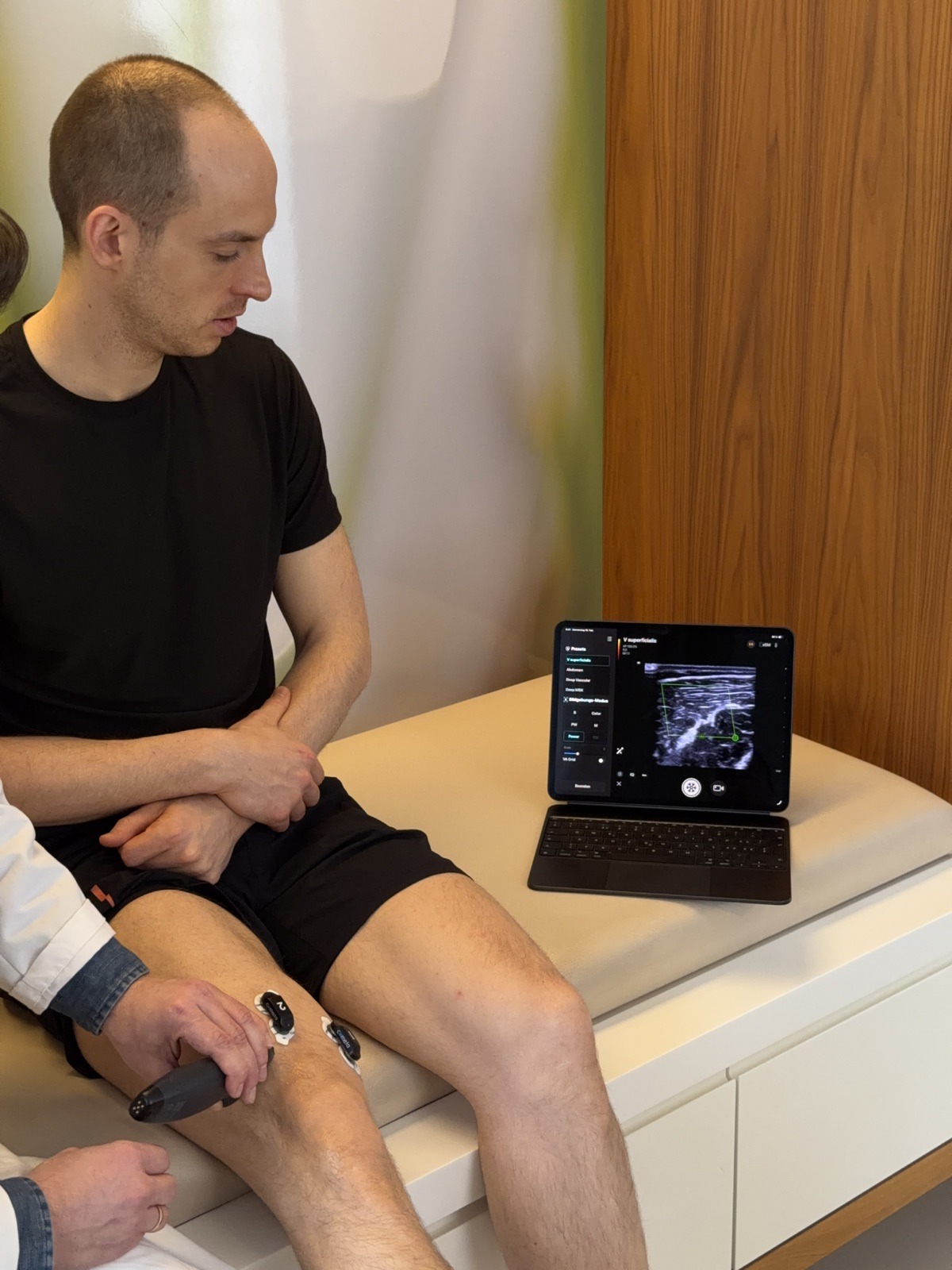
The clinical and functional examination can consider mobility, strength, balance and single-leg control through the foot, ankle, knee, hip, pelvis and trunk. Which tests are appropriate depends on the symptoms and whether the purpose is treatment, rehabilitation or performance.
Walking or running observation may then examine cadence, step length, foot contact and the movement of the knee, hip, pelvis and trunk. The test conditions should relate to the question being asked. A movement difference is an observation, not proof of the cause of pain.
Plantar pressure measurement may be added when loading beneath the foot, footwear or an orthosis is specifically relevant. It is not automatically necessary for every runner and a pressure difference alone does not establish that an insole is needed.
Choosing the method
Do you need 3D running analysis?
The label “3D running analysis” does not by itself tell you which clinical question a test will answer. The appropriate method may involve clinical functional testing, treadmill observation, video analysis or selected pressure measurements. Confirm the available method and agreed test scope before booking; not every appointment includes every measurement.
A useful assessment explains how the chosen method informs a decision and where its limits lie. More measurements do not automatically make a recommendation more accurate. Medical interpretation remains necessary whether the images are two-dimensional or a three-dimensional system is used.
From assessment to training
Make a small number of changes that can be reviewed.
Possible next steps include adjusting distance, pace or hills; progressive strength work; balance and single-leg control; a gradual return-to-running plan; or a carefully tested technique change. Footwear or orthoses may be compared when the clinical question warrants it. Sometimes the appropriate next step is further medical assessment rather than a technique correction.
Ask which finding matters, what change is proposed and how its effect will be assessed. A change that reduces load at one location can increase it elsewhere. There is no single foot strike or cadence that is best for every runner, and neither a gait test nor a technique adjustment can guarantee freedom from future injury.
After an injury or operation
Readiness is more than the number of weeks since injury.
Returning to running depends on the injured tissue, healing, strength, movement control, confidence and tolerance of progressively greater load. Being comfortable in daily life does not automatically establish readiness for continuous running or competition.
Assessment can help connect the rehabilitation plan with the next running stage. Agree how symptoms during the session and afterwards will influence progression, and who will review setbacks. The operating team's restrictions remain important after surgery.
Planning your visit
Bring your training history, not just your shoes.
Bring your usual running shoes, clothing suitable for movement, relevant reports and a brief training record. Include previous rehabilitation, footwear or technique changes and their effect. Tell the practice if you cannot currently run or have restrictions following an operation.
Before arranging the appointment, confirm its scope, location and fee, and whether a separate clinical consultation is needed. Insurance reimbursement depends on your policy and the services provided. This is relevant whether you live in Munich, travel from elsewhere in Germany or visit from abroad.
Clinical background
Read the detailed discussion and research.
The German clinical article describes the examination components, possible uses and limitations in more detail and lists its research sources. The references below address medically based running assessment and the limits of using individual measurements to predict injury.
Common questions
Answers to common questions.
How is medical gait analysis different from a running-shop assessment?
It relates movement to symptoms, examination, functional capacity and training history. Shoe selection may be relevant, but it is not the only purpose of the consultation.
Will a running analysis diagnose every cause of pain?
No. It can describe movement and the response to a task. Clinical assessment and, when indicated, imaging are still needed to investigate a structural injury.
Does every runner need pressure measurement or insoles?
No. Pressure measurement should answer a relevant additional question. Neither an asymmetry nor a single pressure value automatically establishes a need for insoles.
Is the English information only for international visitors?
No. It is also intended for English-speaking runners who live in Munich or elsewhere in Germany. Confirm the consultation arrangements, fee and insurance coverage before your visit.
Author and medically responsiblePD Dr. med. Daniel P. BertholdSpecialist in Orthopaedics and Trauma SurgeryUpdated
Next step
Which performance or prevention question should the program answer?
Describe the goal and current training or health context. The inquiry can then be matched to the appropriate performance or prevention offer.